
Choose by room and exposure
Interior walls, exterior elevations, ceilings, metalwork and wood need different preparation and products. Hyderabad's sun, dust, seasonal rain and shaded damp areas expose coatings in different ways. Ask the painter or supplier to name the product and primer for each surface and explain what maintenance the finish needs. Compare the total system and stated coverage rather than relying on a paint label's headline warranty. Product warranties commonly have conditions and do not promise that a coating will stop water entering through a wall.
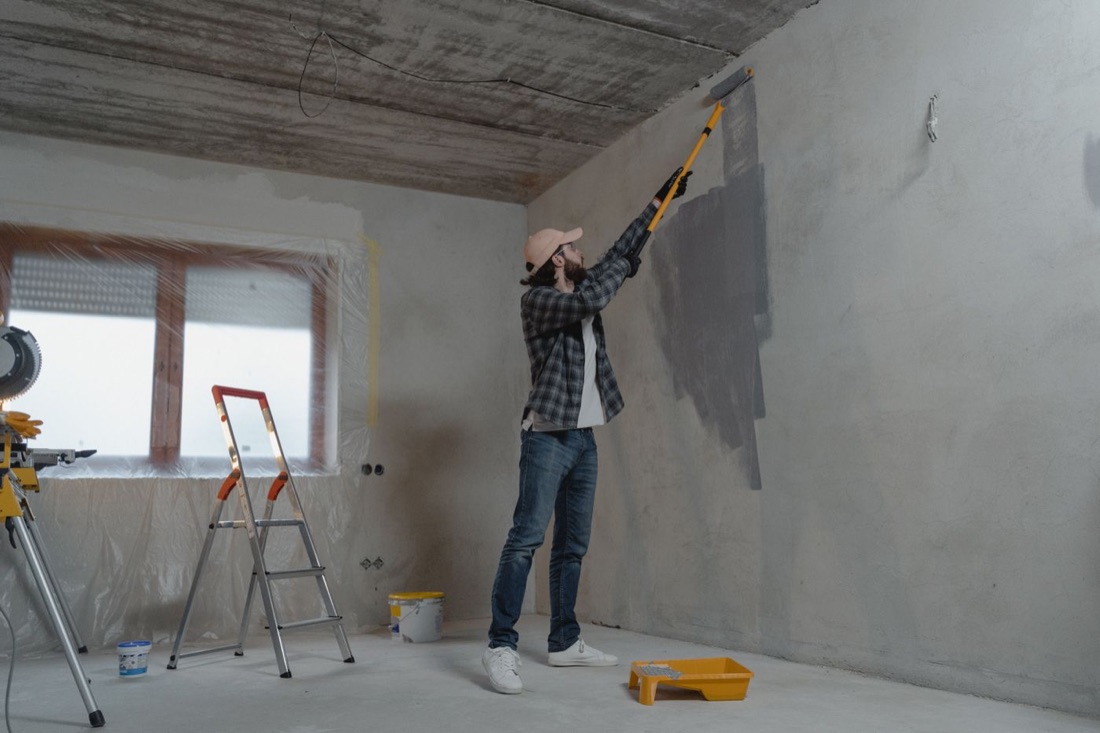
Prepare before buying the final quantity
- Confirm plaster is sound and sufficiently dry for the chosen product. One manufacturer's technical sheet may recommend a waiting period; the actual product, surface and weather control.
- Investigate damp patches, salts, mould and recurring cracks. Repair the source and allow the substrate to meet coating instructions before applying putty or primer.
- Agree the sequence of cleaning, filling, sanding, primer, putty and finish coats with the product supplier. Avoid applying a coating over dust or loose chalking.
- Prepare a sample on the actual wall and view it in daylight and artificial light. Record the product, shade reference, sheen and approved sample location.
- Protect tile, windows, switches, counters and hardware. Agree how the crew will ventilate rooms and store solvent or water-based products safely.
During application
- Check sealed product labels, batch and shade information. Keep tins for the same continuous wall from consistent batches where practical and mix according to the maker's instructions.
- Ask the painter to follow dilution, tool, coverage and recoat intervals in the technical sheet. A quoted coverage is indicative and can vary with surface porosity, preparation and application.
- Use suitable fall protection and access equipment for exterior work. Do not allow painting crews to improvise unsafe access at height.
- Inspect in consistent light between coats for missed areas, runs, roller marks or a difference from the approved sample. Record concerns while the crew can correct them.
- Keep wet coatings protected from dust, rain and early use for the period stated by the manufacturer.
At completion
- Walk each room with the approved sample and note patchiness, drips, missed edges, paint on hardware and uncompleted touch-ups.
- Confirm paint codes, product names, batch labels and care or cleaning instructions are recorded.
- Agree touch-ups after other trades finish, and retain a small, labelled amount for future repairs if the supplier recommends it.
Common pitfalls
- Painting over active dampness or salts masks a symptom while the underlying source remains.
- Choosing a shade from a phone image or small card can produce a different appearance across a large wall and under Hyderabad daylight.
- Using one product sequence on every surface ignores the substrate and the manufacturer's requirements.